Get your priorities straight

Featured

Channel your inner Leslie Knope or Amy Santiago and grab your favorite post it notes or flash cards.

booyah | Leslie knope, Amy poehler, Knope

1. On each card write out everything you have to do this week, seven days.

2. Now lay out all those cards so you’ve got a good view of them all and ask yourself the following questions: what has to get done? What would be nice to do? What has to be done today? As you ask the questions, you probably are rethinking some of those things, right? Do you really need a Target run or would it be great to sip a Starbucks and wander the aisles aimlessly listening to your favorite podcast?

Writing out the tasks helps to visualize and move things around in priority.

3. Next with those same cards, what if you only had 1 day to get anything done? Can some of those cards wait? Could you get more done in 1 day vs 7?

Congratulations! You’ve just gone through a prioritization exercise! We prioritize everything in our lives, what we do, where we go, which party to attend, which stores to run to for supplies, which chores to do. Why should work be any different?

There are dozens of prioritization methods and measurements out there that you can use. Some are more financial focused, some are business value focused. No matter what method you choose, choose the one that works for you and your team.

Seeing everything out can help you start to group similar items and recognize themes

Here are some prioritization methods: MoSCoW, Backlog Grooming, WSJF, story mapping, QFD, and so many more. My go to is the MoSCoW method, it’s an acronym broken down in the following way: Must have: these items are must haves for companies, customers must have it in order to sell, use, buy, you name it, it’s in. Should have- these are features or things the product should have to make it more useable, more buyable, etc. these are close follows to should have but in the event of money or budget constraints when something’s gotta give, these sit out. Could have- sure, the coffee maker could have two hot pots for two mugs of coffee, but it’s not absolutely necessary, lower priority or easy backlog candidates. Wont have (also ‘would be nice have’ for POs who like to say gentle nos): strong POs can say no easily, but back it up with metrics, stats, business objectives, levels of effort, etc…, nicer POs can say these items would be nice to have but offer no particular value, as in no one would notice of it wasn’t in there, and few people would use it/like it, even if Bob in sales wants it.

Prioritization is not done in a vacuum, but if you find yourself having to prioritize a series of stories or bugs or projects, consider a method above or try a bunch of different ones that work for you, your team, or your company. At the end of the day, it doesn’t matter how you get there, only that you do get prioritized.

If the Nine-Nine was a Life Coaching Center - The Happy Sensitive
Make it official with a binder (or the digital binder of confluence, both are good)

Tl;Dr: pick a method that works for you to prioritize your time, your team’s time, and try out MoSCoW, hey it even has it’s own theme song ;).


When nobody has time for that…and how to combat it

Featured

It goes without saying that the roaring 20s 2.0 stopped many things in its tracks. The one thing it didn’t stop was the daily grind and hustle of work. Like a flapper on speed, work only seemed to intensify; hours became longer, days off were in short supply, and the thin line that separated work life balance dissolved. What we all collectively seem to realize is time is a precious commodity, and an absolute necessity, especially in the workplace.

COVID-19: Navigating life in quarantine, one Schitt's Creek GIF at a time |  India Development Review

In Product, time is inextricably linked to another element in the lifecycle process. When there is not enough time, something has to give, be it key features, budget, or unrealistic expectations. Product is not grey area, it’s negotiation, compromise, and a healthy dose of realism. Here are some of the most common time constraints I’ve observed where time + insert-lifecycle-step converge and how to combat them:

  • Project goals + time: Goals and deadlines will almost always cause time constraints. When a project objective has to be met (whatever the reason), prioritization of features or fixes is key. In short, you want to meet that Q3 deadline, this is all we have time for the meet all the project milestones.
  • How to combat this time constraint? Know the projects goals, sub goals and how they rank. Maybe hitting the deadline is more important than delivering everything originally desired/in scope. Knowing the project goals and what the business and stakeholders want to hit will help to prioritize the most important features or fixes that align to those goals and also which blocks can be cut out if needed.
  • Budget + time: More often than not, budgets will dictate what can be in scope and out of scope of a project. Maybe there is not enough time to get more funds or money must be used within a certain time frame such as a quarterly end or fiscal close, but it tends to be “here is how much money I have, how many bells and whistles will this buy me?”
  • How to combat this time constraint? Know what the budget is and who are the major line holders. How much budget is allocated to people vs resources? Does the budget reflect the amount of work estimated? What features or fixes does the budget cover? Knowing what budget is allocated will help to trim potentially expensive and costly feature and allow for more to be in scope.
  • Prioritization + time: What people want to see from a product is not always in the cards (see project goals and/or budget). It takes time for product to meet with stakeholders, research markets and product landscapes, roadmap, and storymap, and requirement breakdowns.
  • How to combat this time constraint? Use the prioritization methods that work for you. The business or your team might have a model that works for them but there are dozens out there: Kano, MoSCoW, Quadrant, etc. Knowing what’s always top of mind and what ultimately is most desired sought after, and more importantly why they are most desired and sought after, will aid dramatically when time is of the essence. In other words “knowing what we know today, here are the biggest must haves today” will be the best asset when time is constrained.
  • People + time: Did you know that people only have so much time to give? Really, corporate daddies, it’s true! People only have two hands and so many hours in a day to meet, ideate, plan, work/produce, etc. People need time to not only recharge physically but also mentally. People should never be expected to produce at 100% every single day, especially when work gets in the way.
  • How to combat this time constraint? Take your lunch hours, your vacation time, your mental health days. Encourage and allow your teams do the same. Countless studies have proved that healthy people work better and ultimately produce better. Be sure time for these activities is accounted for in budgets and project plans because if your people go, you lose a lot of time trying to bring newbies up to speed and get back on track. Work will always be there so take the time you need to be healthy and well, deadlines, budgets, and all be damned.
  • Ideas + time: I debated about this one but it needs to be said- people need time to create and think of new ways of doing things. At the very least, people need time to process the copious amount of meetings, data points, analysis, and feedback and synthesize it into a tangible and easily distilled idea. If you’re into brainstorming, you know the number one thing you need? Time! Brainstorms don’t always produce quality ideas so time is absolutely needed.
  • How to combat this time constraint? Appreciate people’s time. Not everyone in the business is afforded it with deadlines and marks to hit, and not everyone thinks creatively on an 8-5 clock. Also allow yourself time to decompress and especially sleep. Some of the best ideas and thoughts come from minds drifting off to sleep or after having a restful night’s sleep. Best way to combat this time constraint is to take as much control over your time as possible and respect other’s time to do the same.
Maxine Waters Reclaiming My Time GIF - Find & Share on GIPHY

Time ultimately is a social construct. Not everyone or everything is meant to work within tight time confines. The best developers I know work best around midnight. Problems can be solved and lessons can be learned, ideas can be born and beautiful products can be created. All we need is the time.

If time cannot be bought, and it’s the one thing we don’t get back, then following that logic we should know time is precious and use it well and realistically.

Titles don’t always define product

Welcome to Product! Where the roles are made up and the titles don’t matter!

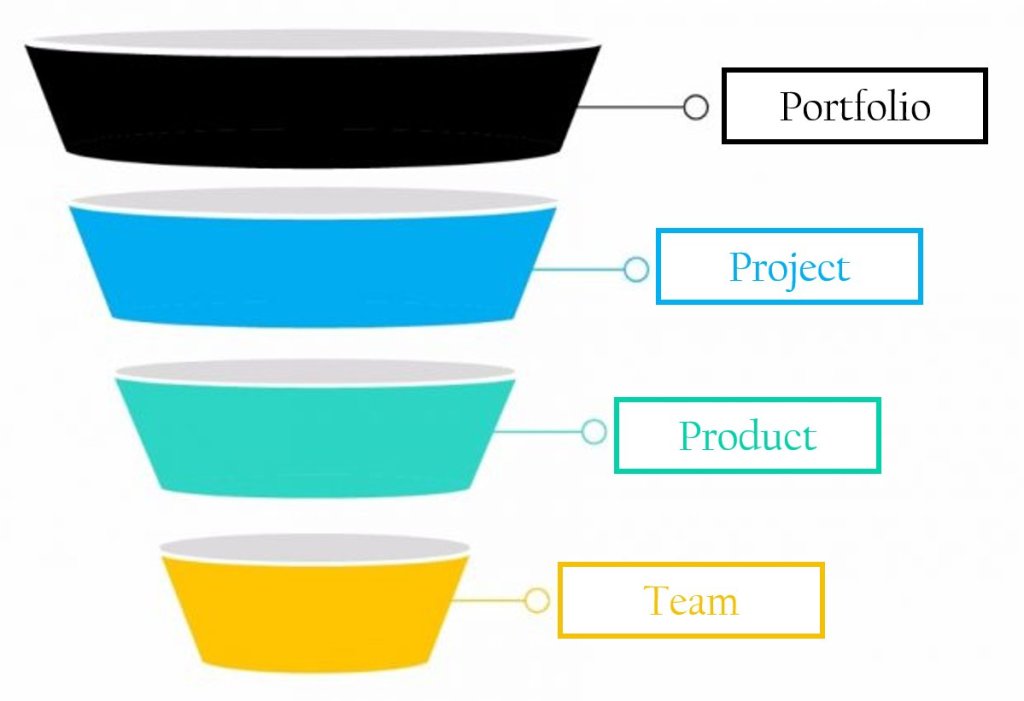
If you’ve never heard of a product owner, you’ve no doubt seen the function being performed in some capacity. Pragmatic Marketing once noted that there are over 250 different job titles for the same roles and responsibilities as a product owner. Frank Caron articulated the trouble with titles well in his Medium post about the PO title. Rather than focusing on the title, let’s look at the different levels of Product and discuss some of the roles, responsibilities, and most importantly the hard and soft skills required for each of these levels.

Portfolio Level: Focusing on multiple products and multiple projects. This level often oversees the overall high-level vision of a suite of products and/or projects. Most closely aligned to the high-level vision of the company or product suite, the position will look across multiple roadmaps, multiple departments and disciplines.

  • Hard skills: Organizational, strategic, budget and operational, analysis, communication
  • Soft skills: Relationship building, informal influence
  • Titles: Portfolio Manager, Project Manager

Project Level: Focusing on a set of projects. This level can sit above or below a product level depending on the size, complexity, and structure of a product. Typically, it is above a product since it can span multiple products and be captured within the portfolio. This level often oversees projects initiatives within a framework or group and across multiple products and disciplines. Focus is more on the individual initiative and seeing it through to completion.

  • Hard skills: Risk assessment, communication, organization, time management
  • Soft skills: Leadership, relationship building, informal influence, attention to detail
  • Titles: Project Manager, Program Manager, Product Manager

Product Level– Focusing on a specific product. This level is more focused on a specific product or product line, owning an individual roadmap and overall single product vision. Responsibilities can vary between inward team focused to the team level or outward facing with more marketing and communications focused of a product. The commonalty between the inward and outward focuses is the ability to communicate a vision of the product, identify key features and deliverable, and a deep understanding of the customer- their wants, needs, and problems.

  • Hard skills: Communication, time management
  • Soft skills: Informal influence, decisiveness
  • Titles: Product Owner, Product Manager

Team Level– Focused on the delivery of features of a product. Focused on taking the vision and breaking down into feature sets, story writing, and planning. Sitting within the team and responsible for bringing the product vision to the team level in terms of effective story writing and acceptance criteria, being able to move multiple features, bugs, and initiatives at once, modifying backlog of work to reflect changing requirements and vision, and being able to say no.

  • Hard skills: Business <-> IT translation, storytelling, written and oral skills, time management
  • Soft skills: Adaptability, Decisiveness
  • Titles: Product Owner, Business Analyst, Technical Writer

There are many similarities across these levels, and many of the positions require similar hard and soft skills to excel in the role. Titles don’t always reflect the role and responsibility but chances are Product people sit in one, or more likely multiple, levels above. What these levels represent is the ambiguity of the very nature of Product, but it also shows the adaptability of the role and the people who are in these roles. Depending on the company, the product, and the team make up, a well-seasoned Product person can sit at any one of the levels as they all drive to the same goal: Product success (however it is defined).

So roll the dice, throw a dart at a job tile board, and step up to a level that works for you and your organization.

What is Product

Think of your favorite product. For me, it’s my robot vacuum, Roomba’s cooler and cheaper cousin, Eufy. For you, it might be your car, your phone, a comfy bed or couch, or even a snuggie. Now think about why you love that product. Does it solve a problem for you? Chances are it brings you joy, and you’re likely to recommend it to everyone you know. To me, Eufy quietly and efficiently vacuums my floors every morning before I get out of bed, a chore I previously did at least 4 times per week. He saves me time, he cleans up the dog fur and crumbs, and he does it well. Behind the products we love are Product people; working in the ambiguous world between the people that use the product and the people that build it. Welcome to my world.

The best way to describe Product is having one foot on the business side and one foot on the development side within an organization. On the business side, they can crunch financials, calculate and quantify risks, communicate plans and timelines, manage expectations, synthesize enormous amounts of data (customer, stakeholder, executive, strategic) and make business decisions quickly and confidently. On the development side, they communicate a vision to a team of designers, engineers, and analysts, and step back to allow teams to get the work done but keep them on track to the overall product vision to eventually deliver a Eufy as a finished product. Product then helps to communicate why Eufy is the greatest robot vacuum of all time in an already crowded robot vacuum market.

1557933398280_why2151744948700083917.png

To break this down even simpler, Product is always answering the question of ‘why?’.

Why does this take so long to develop?” Executives will ask. “Why are even developing this at all?” Engineers will ask. “Why can’t I have it now?” The customers will implore. Through various tools and techniques, Product’s job is to remain on the offensive, always prepared to answer these questions from either side of the organization. It’s a delicate balance of hard and soft skills and the job is not for the faint of heart. It’s a difficult role, made all the more difficult by it’s ambiguity.

Throughout my musings on Product Offensive we’ll dive deeper into the world of Product, from practical advice, to tools and techniques to manage the most challenging problems. So why stay tuned? Because great Products take great Product people, and there’s no playbook for how to do this job. But if you want to know how great Product people are developed, this can help you on that way, and maybe together we can develop the next best Eufy.

screenshot_20190515-1003572463326583286294811.jpg

The Journey Begins

My name is Kendall and I’m a product person. When I got started in product work, there was no playbook, no guide to how to do this job. 10 years later, there still isn’t, but I picked up some practical advice that I hope you can use in your day-to-day. Thanks for joining me on this journey!

“What I do all day, is meet with teams of people, and work on ideas, and solve problems, to make new products, to make new marketing programs, whatever it is.” – Steve Jobs

IMG_20181226_073508